
April 14, 2026
teeth whitening
We all love a good meal, but have you ever considered how your favorite foods could impact your smile? You may not even notice, but many common foods and beverages can stain your teeth. In this blog, we’ll talk about 10 surprising culprits that can cause a yellow stain on your teeth and why you should be aware of them. And if you’re in need of dental care, whether it’s for teeth whitening or general maintenance, a dentist can help you maintain that healthy, radiant smile.
1. Coffee and Tea
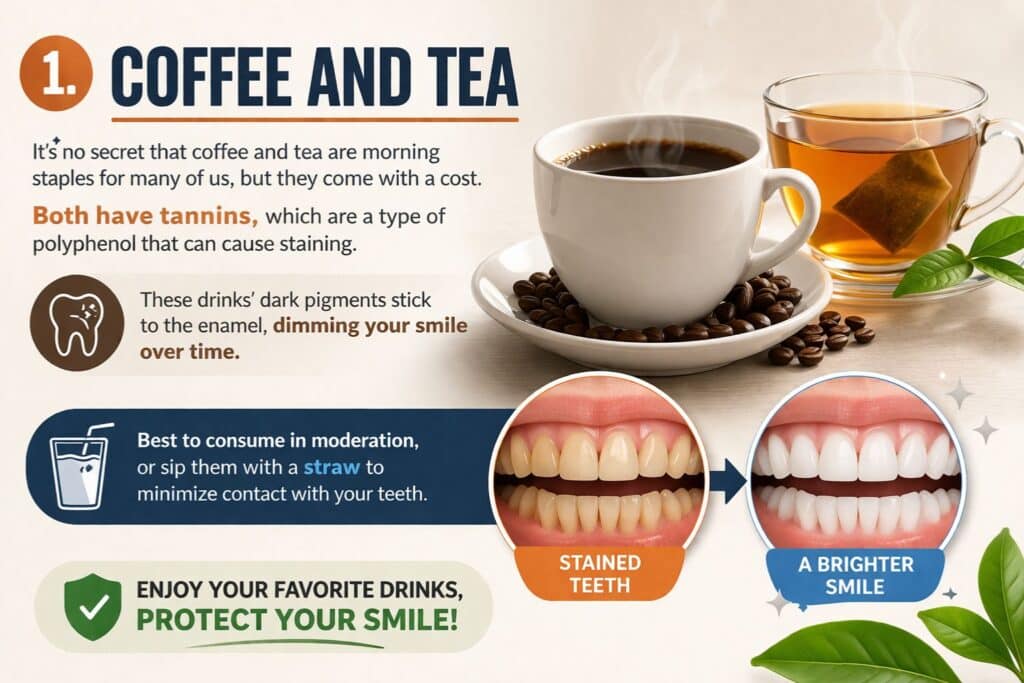
It’s no secret that coffee and tea are morning staples for many of us, but they come with a cost. Both have tannins, which are a type of polyphenol that can cause staining. These drinks’ dark pigments stick to the enamel, dimming your smile over time. Best to consume in moderation, or sip them with a straw to minimize contact with your teeth.
2. Berries and Fruit Juices
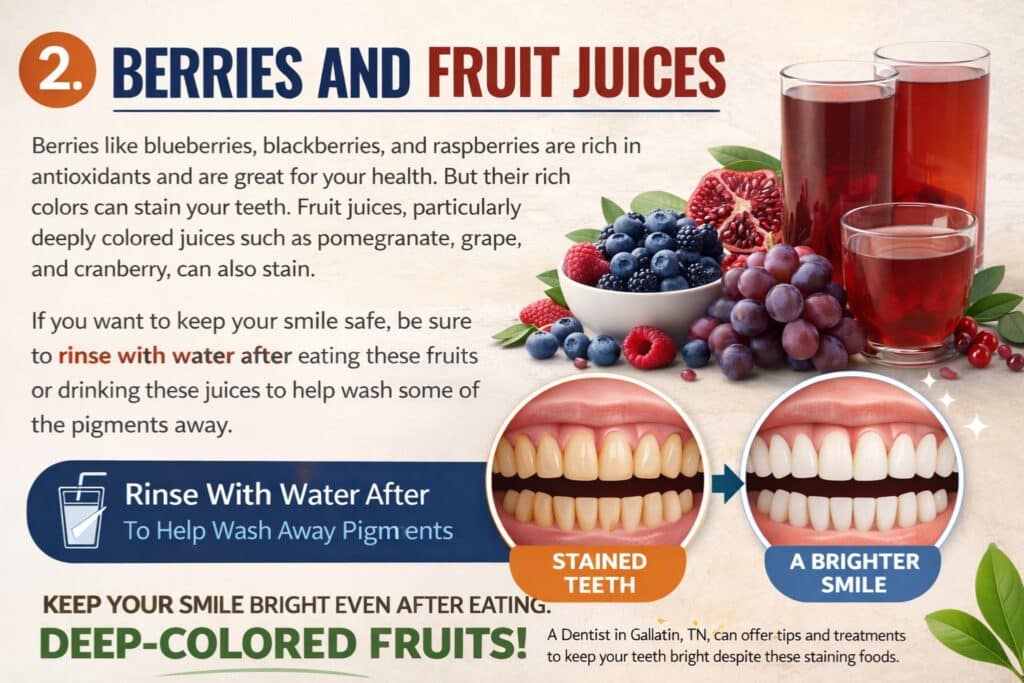
Berries like blueberries, blackberries, and raspberries are rich in antioxidants and are great for your health. But their rich colors can stain your teeth. Fruit juices, particularly deeply colored juices such as pomegranate, grape, and cranberry, can also stain. If you want to keep your smile safe, be sure to rinse with water after eating these fruits or drinking these juices to help wash some of the pigments away. A dentist in Gallatin, TN, can offer tips and treatments to keep your teeth bright despite these staining foods.
3. Red Wine
Although a glass of red wine can be a wonderful complement to your meal, it’s notorious for causing dental stains. Red wine’s tannins and acidity are great at binding to tooth enamel, so you can consider it one of the top culprits for staining. If you like wine, have some water afterward, and brush your teeth when you get a chance.
4. Soy Sauce and Balsamic Vinegar
You wouldn’t have thought soy sauce and balsamic vinegar would be on this list, but these condiments are dark and acidic. They’re notorious for staining, particularly with frequent intake. If you are eating sushi or a salad, wash it down with some water to decrease its effects on your teeth.
5. Tomato-Based Sauces
Tomato sauces, such as pasta or pizza sauces, are another surprise stain generator. Tomatoes, with their acidity and deep red color, certainly can leave their mark on your teeth. These sauces can also stick to your teeth, so it’s essential to rinse or drink water after enjoying these dishes.
6. Curry
Curry, it turns out, is a spice-laden favorite of ours, but its rich yellow tone comes courtesy of turmeric — a spice known for staining. Turmeric can seep into your enamel, coloring it if consumed too often. Consuming curry alongside foods like yogurt or rice might mitigate the staining potential.
7. Hard Candies
Hard candies, like lollipops or cough drops, not only contain sugar, but they can also stain your teeth. The dyes found in many candies can stain your enamel, causing a dull or yellowish cast. Don’t eat too many sweets and brush afterward to protect your teeth!
8. Cola and Soft Drinks
Due to their acidity and dark color, Coke and other sodas are a leading cause of tooth staining. While you may not be aware of it, regular consumption of these drinks leads to gradual tooth staining. If you’re a soda lover, drink it with a straw to limit its contact with your teeth.
9. Sports Drinks
Most sports drinks, which are supposed to be a healthy form of hydration, contain high levels of artificial coloring, sugar, and acidity. All of these can cause tooth staining as well. So, instead, have them in moderation and then wash your mouth out to reduce the damage.
10. Candy Bars and Chocolates
Believe it or not, but candy bars and chocolates can also cause teeth stains. Sticky candies, in particular, can adhere to your teeth’s surface, allowing sugar and color to stick. To avoid it, rinse your mouth after you enjoy a treat.
How to Keep Your Teeth White Even with Staining Foods
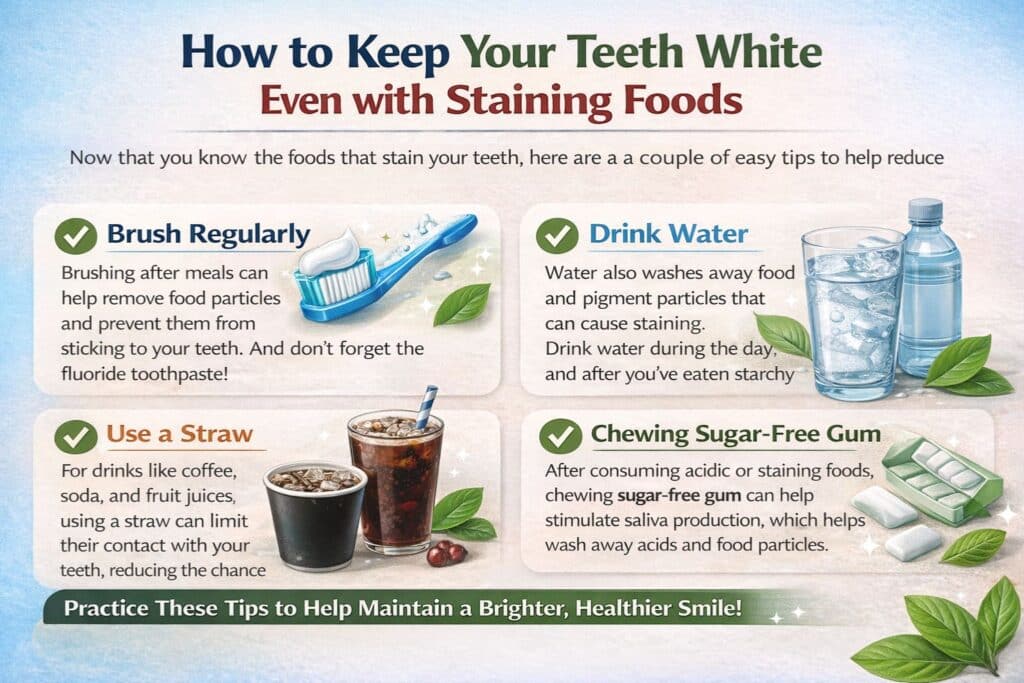
Now that you know the foods that stain your teeth, here are a couple of easy tips to help reduce the impact:
- Brush Regularly: Brushing after meals can help remove food particles and prevent them from sticking to your teeth. And don’t forget the fluoride toothpaste!
- Drink Water: Water also washes away food and pigment particles that can cause staining. Drink water during the day and after you’ve eaten starchy foods.
- Use a Straw: For drinks like coffee, soda, and fruit juices, using a straw can limit their contact with your teeth, reducing the chance of staining.
- Chewing Sugar-Free Gum: After consuming acidic or staining foods, chewing sugar-free gum can help stimulate saliva production, which helps wash away acids and food particles.
Maintaining Your Smile Bright in Gallatin
If you’re noticing that the foods you love are causing your teeth to lose their brightness, a visit to a dentist in Gallatin, TN, could be just what you need. Professional cleanings and teeth whitening treatments can remove surface stains and restore your brilliant smile. Here at Sumner Dental Group, we’re committed to giving our Gallatin patients the personalized attention they deserve to keep their teeth healthy and sparkling!
Get a Brighter Smile Today!
Don’t let staining foods get the best of your smile! Book a cleaning or whitening with our Sumner Dental Group experts. We’re here to help you get and keep a radiant smile. Book your appointment now!
Common Questions People Ask
1. How can I prevent tooth stains from coffee and tea?
Limit consumption, drink water afterward, or use a straw to reduce contact with your teeth.
2. Do whitening toothpastes really work?
Whitening toothpastes can help remove surface stains, but they don’t change the natural color of your teeth. Professional whitening treatments are more effective for deeper stains.
3. How often should I visit my dentist for a cleaning?
It’s recommended to visit your dentist every six months for a regular cleaning and checkup to maintain good oral health.
4. Can teeth whitening treatments be harmful?
Professional teeth whitening treatments are generally safe when performed by a dentist. It’s important to follow your dentist’s instructions for the best results.
Recent Posts
Apr. 14, 2026
10 Common Foods That Can Cause Teeth Stains You Might Not Expect
Apr. 09, 2026
How Long Do All-On-4 Implants Last? Longevity and Maintenance Tips
Mar. 27, 2026
Are You a Candidate for All-On-4 Implants? Key Eligibility Factors
Mar. 13, 2026
Recovery Tips After All-On-4 Teeth in a Day Surgery

Feb. 16, 2026
Oral vs. IV Sedation: What’s the Difference and Which Is Right for You?
Catagories
- Bad Breath (1)
- Cosmetic Dentist (2)
- Dental Bonding (1)
- Dental Checkups (6)
- Dental Crown (1)
- Dental Fillings (1)
- Dental Implants (24)
- Dental Insurance (2)
- Dental Sealant (3)
- Dental Veneers (6)
- Dentures (7)
- Emergency Dentistry (9)
- Gum Disease (2)
- Invisalign (5)
- Mouthguard (3)
- New Year (1)
- Oral Health (13)
- Periodontal Treatment (2)
- root canal (4)
- Sedation Dentistry (2)
- Sumner Dental Group (6)
- teeth whitening (9)
- Tooth Extractions (10)
- Uncategorized (0)
- Wisdom Tooth Extraction (1)